
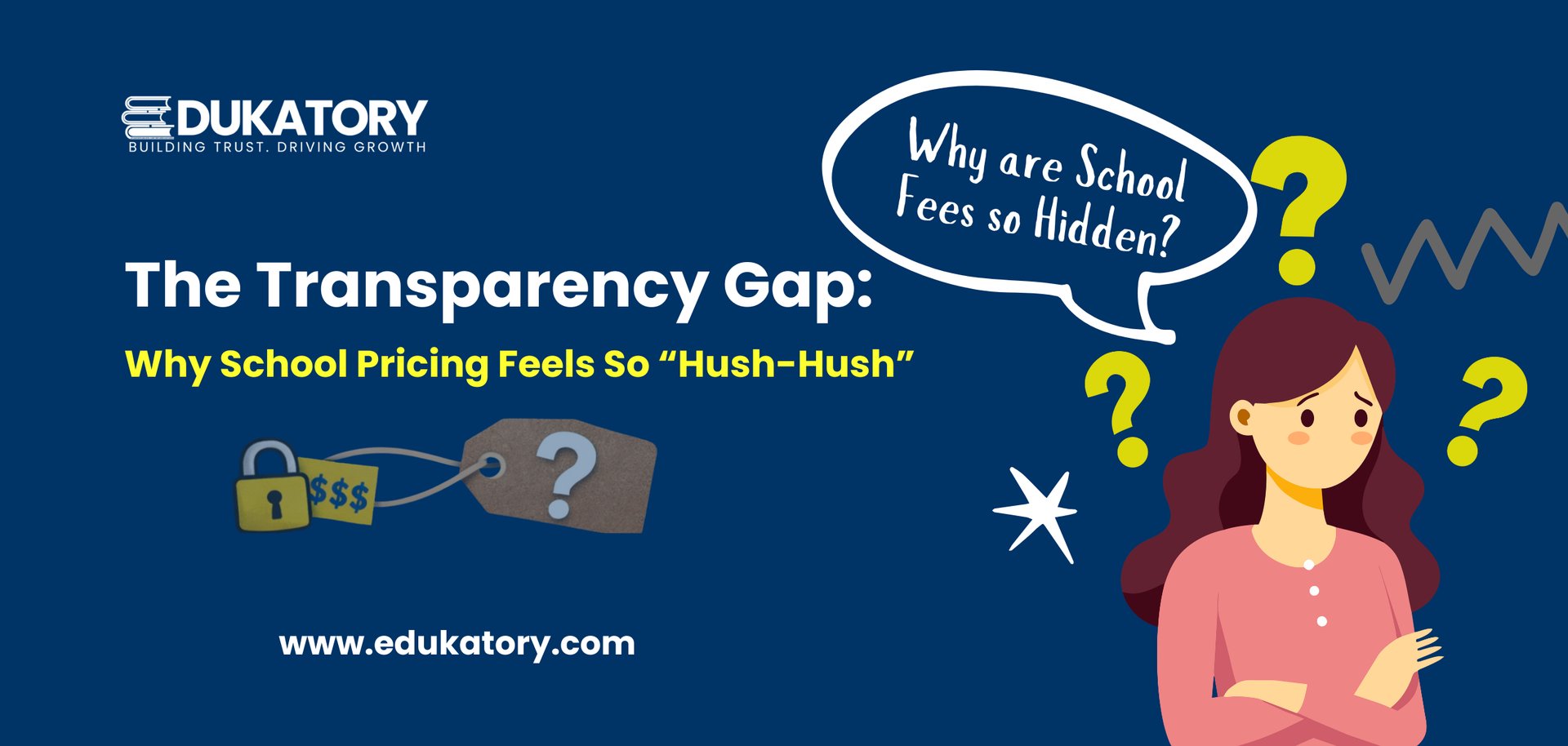
Choosing a school is one of the biggest decisions a family makes. Parents spend hours researching curriculum, values, facilities, and learning outcomes. Yet when it comes to one crucial detail—pricing—many schools go quiet.
Fees are often missing from websites, buried behind inquiry forms, or shared only after multiple conversations. This creates what many parents experience as the transparency gap.
Why Do Some Schools Avoid Sharing Fees?
One common reason schools hesitate to publish their fees is the fear of price shopping. The concern is that families will compare numbers without fully understanding the school’s value, philosophy, or community.
While the concern is understandable, the result can be counterproductive. When pricing information is hard to find, parents don’t stop comparing—they simply do so with less clarity and more uncertainty.
When Information Is Missing, Trust Is Affected
A lack of clear pricing often raises more questions than answers:
Can our family realistically afford this school?
What other costs will appear later?
Are there “hidden” fees we should prepare for?
Instead of feeling welcomed, parents may feel hesitant or cautious. Over time, this uncertainty can quietly weaken trust before a relationship even begins.
The Real Cost Is More Than Tuition
For many families, tuition is only part of the picture. Additional expenses can include:
Uniforms and school supplies
Technology or digital learning fees
Activity, exam, or field trip costs
Meals, transport, or after-school programs
When these costs are introduced late in the process, families may feel caught off guard. Surprises—especially financial ones—rarely create positive first impressions.
Transparency Signals Respect and Partnership
Schools that communicate costs clearly send a powerful message:
"We respect your time, your planning, and your role as partners in your child’s education."
Transparent pricing does not mean a school must be the most affordable option. It simply means being honest about the full investment required so that families can make informed decisions with confidence.
What Transparency Says About School Culture
Open communication around fees often reflects deeper values within a school. It suggests:
Confidence in the quality of education offered
Clear systems and expectations
A family-centered approach to engagement
In many cases, transparency is one of the earliest signs of a healthy school culture.
Bridging the Transparency Gap
Parents are not just looking for numbers. They are looking for clarity, predictability, and trust. When schools provide upfront information—including estimated annual costs and common extras—they empower families to plan responsibly and feel secure in their choices.
Closing the transparency gap is not about simplifying education into a price tag. It is about aligning communication with values. Education works best when schools and families move forward together—openly, honestly, and with shared understanding. Transparency is not a risk. It is a foundation.
Because when it comes to education, trust should come first.
Final Thoughts: Clarity Builds Confidence
When schools are open about pricing, families feel more confident asking questions, planning, and committing long-term. Transparency reduces stress, strengthens trust, and sets the tone for a healthy partnership between school and home.
For parents, clear information is not about finding the cheapest option—it’s about finding the right fit without uncertainty. And for schools, transparency is an opportunity to show integrity, confidence, and respect for the families they serve.
At Edukatory, we believe parents deserve clear, comparable, and reliable information when choosing a school. That’s why we work to surface not just academic offerings, but also practical details—so families can make informed decisions with peace of mind.
Whether you’re exploring options, comparing schools, or planning for the years ahead, Edukatory helps you navigate the education landscape with clarity and confidence.