
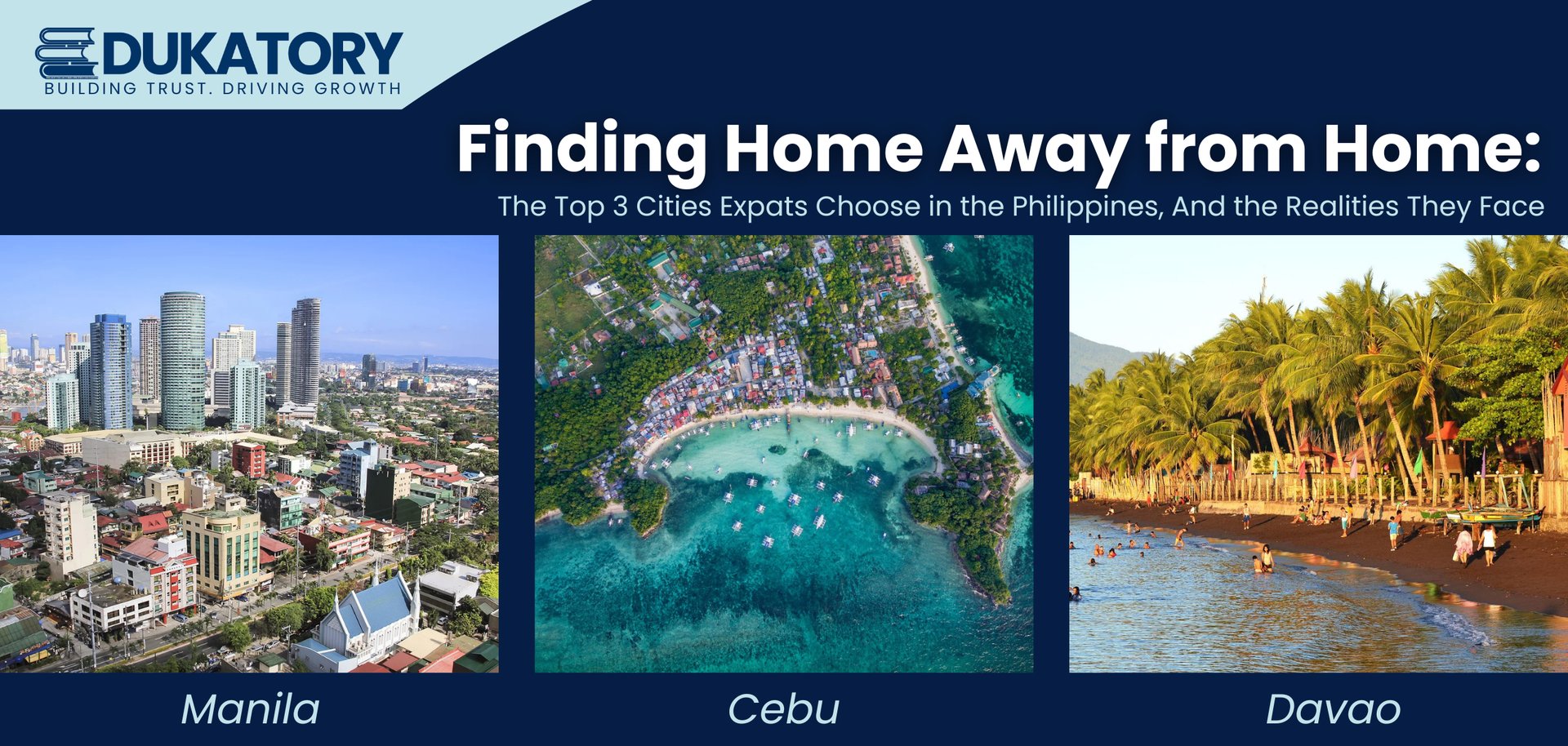
The Philippines continues to attract expats from around the world. Professionals on international assignments, entrepreneurs building regional businesses, retirees seeking a relaxed lifestyle, and families relocating for new opportunities in Southeast Asia all find appeal here.
The country consistently ranks among the most welcoming destinations for foreigners. English is widely spoken, education is delivered primarily in English, and the cost of living remains lower than in many Western countries. According to global expat surveys, affordability and ease of communication are among the Philippines’ strongest advantages.
But while relocation may seem straightforward, daily expat life brings practical realities, especially for families with school-age children.
Choosing the right city is important. Choosing the right school often matters even more.
Below, we explore the top 3 cities in the Philippines most commonly chosen by expats and what families should realistically expect.
1. Metro Manila (Makati and Bonifacio Global City): The International Hub
Metro Manila, particularly Makati and Bonifacio Global City (BGC), remains the epicenter of expat life in the Philippines.
These districts are home to:
Multinational corporations and embassies
International hospitals
Premium residential condominiums
A large concentration of international schools
Established expat communities
For many families, the transition feels smoother here. English is used everywhere. Global brands are familiar. Infrastructure is modern.
The Reality
Convenience comes with trade-offs.
Metro Manila is known for heavy traffic congestion. Commutes that appear short on a map can take significantly longer during peak hours.
Rental costs in Makati and BGC are among the highest in the country. Depending on lifestyle, monthly living expenses for expat families can range significantly higher than in provincial cities.
The upside is educational variety. Metro Manila has the largest number of international schools in the Philippines, offering IB, British, American, and other curricula.
The challenge is not finding a school. The challenge is comparing them properly.
Parents often struggle with:
Understanding tuition breakdowns
Comparing curriculum pathways
Evaluating long-term university alignment
Assessing school culture beyond marketing materials
More options do not always make decisions easier.
2. Cebu City: The Balanced Lifestyle Choice
Cebu City is often seen as the middle ground between metropolitan convenience and island lifestyle.
Within a short driving distance, families can access beaches and resort areas. The pace is generally more relaxed compared to Manila, and housing costs can be more manageable.
Cebu has developed a steady expat community, particularly among entrepreneurs, retirees, and remote workers.
The Reality
Infrastructure continues to improve, but transportation systems are less structured than in major global cities. Traffic is increasing as development expands.
When it comes to education, Cebu offers fewer international schools compared to Metro Manila. This means families must research carefully and plan early.
Common questions include:
Which schools offer internationally recognized curricula?
How competitive are admissions?
Are class sizes comparable to Manila schools?
What are the full tuition and fee structures?
Because options are fewer, choosing the right one becomes even more important.
3. Davao City: Space, Stability, and Simplicity
Davao City attracts expats seeking a quieter and more spacious environment.
Known for its relative cleanliness and structured governance, Davao offers a slower pace of life that many families appreciate. Housing is generally more affordable compared to Manila and Cebu.
The Reality
Davao has a smaller international footprint.
Families may encounter:
Fewer international curriculum options
Limited access to specialized services
Smaller expat networking circles
Educational choices are available, but careful planning is essential, particularly for families seeking specific curricula such as IB or British programs.
The Overlooked Challenge: Finding the Right School
Across all three cities, one challenge consistently surfaces among expat families: information transparency.
Parents report difficulties such as:
Scattered school information across multiple websites
Outdated tuition figures
Unclear fee structures
Difficulty comparing curriculum types
Limited insight into facilities and student culture
Relocating is already a major adjustment. When children are involved, education becomes the top priority. What should feel like an exciting new chapter can quickly turn into weeks of research and uncertainty.
Final Thoughts
Metro Manila offers global familiarity and access.
Cebu provides balance and lifestyle flexibility.
Davao delivers space and simplicity.
Choosing the right city is important. Choosing the right school is critical. For expat families relocating to the Philippines, clarity and structured comparison can make all the difference.
On Edukatory, families can:
Explore schools by city
Compare curriculum types including IB, British, American, and private local
Review tuition ranges
Evaluate school profiles in one centralized platform
Instead of navigating fragmented information, you can make informed decisions with confidence.
If you are planning your move to the Philippines, start by exploring schools in your chosen city on Edukatory and take the next step with clarity.
Sources
Philippine Statistics Authority, population and urban data
Department of Education Philippines, K–12 overview
Global expat surveys on cost of living and relocation trends
Commission on Higher Education Philippines