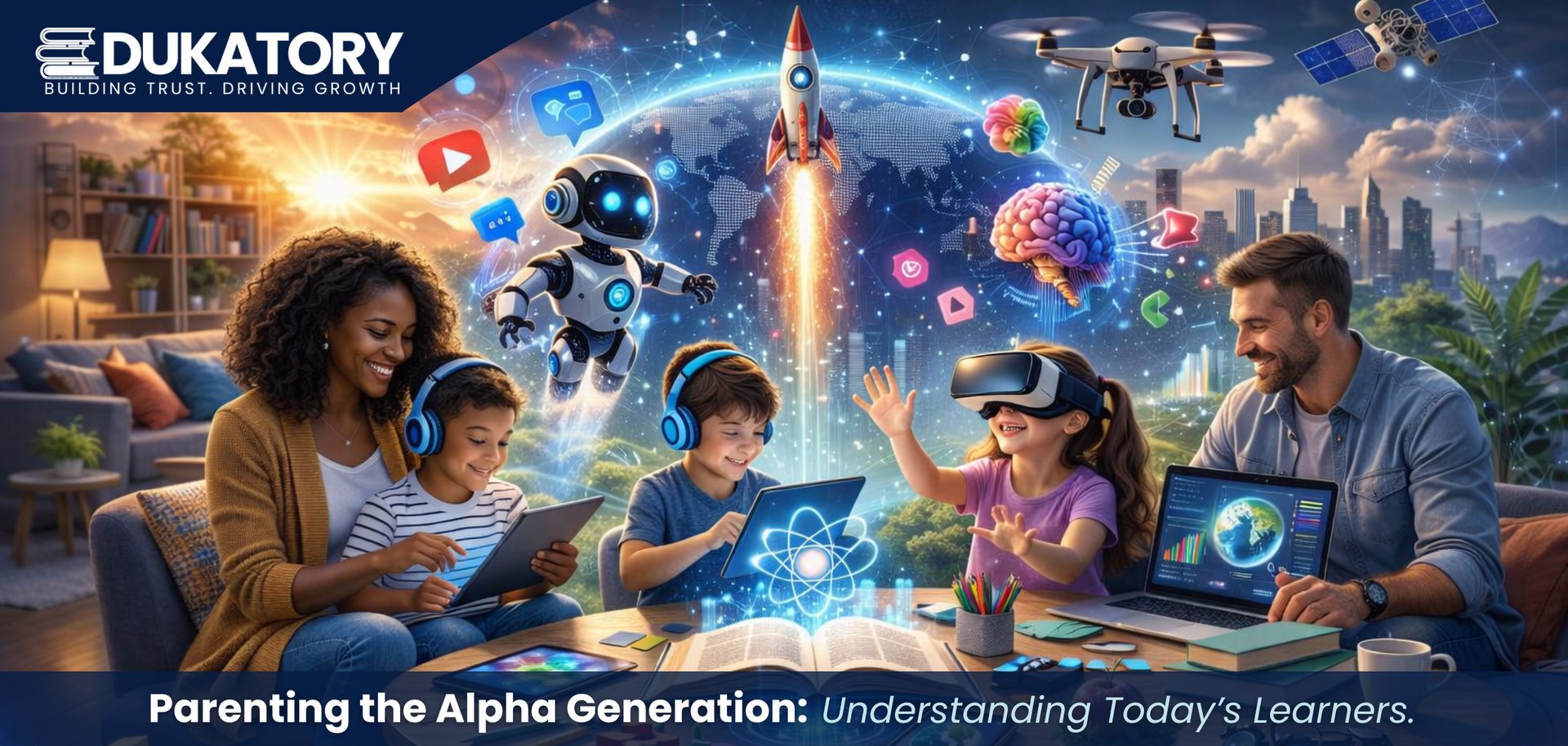
If your child learned to swipe before they learned to write, you’re raising Generation Alpha. Born between 2010 and 2024, Gen Alpha is the first generation to grow up fully immersed in digital technology from birth. Globally, more than 2.8 million babies are born each week, making this generation one of the largest in history.
But scale isn’t the only difference.
Today’s learners are navigating heavier screen exposure, shifting academic standards, and growing mental health pressures, all while parents are trying to choose the “right” school in an increasingly complex education landscape.
This guide will help you understand what makes Generation Alpha different, and how you can support your child academically and emotionally, especially when making school decisions.
Digital Is Their Native Environment, Not a Distraction
For many adults, technology is something they use. For Gen Alpha, it’s the world they’ve always known.
According to Common Sense Media, tweens (8–12 years old) spend an average of 5 hours and 33 minutes daily on entertainment screen media, while teens average 8 hours and 39 minutes per day.
This doesn’t automatically mean children are less capable of learning, but it does mean their brains are used to fast feedback, interactive content, and multimedia input.
What this means for parents:
Instead of asking, “How do I reduce screen time?” Also ask, “What is my child creating versus just consuming?”
Teach digital responsibility, not just restriction.
Look for learning environments that use technology intentionally, not excessively.
When choosing a school, consider asking:
How is technology integrated into learning?
How do you teach digital citizenship?
Do students produce projects, presentations, or portfolios?
The goal is balance, not elimination.
Attention Is Changing, But It Can Be Built
Many parents say, “My child can focus for hours on a game, but not 20 minutes on homework.”
That’s not laziness. It’s conditioning.
Digital platforms are designed around instant reward cycles. Traditional classrooms often operate differently. At the same time, academic performance data shows global learning gaps widening. OECD’s PISA 2022 results reported significant declines in math and reading scores compared to 2018, described as unprecedented in many countries.
This tells us something important: foundational skills still matter deeply.
How to support attention at home:
Use short focus intervals (15–20 minutes).
Create a consistent homework routine.
Ask your child to explain what they learned, teaching strengthens retention.
Praise strategy and effort, not just grades.
What to look for in schools:
Structured classroom routines
Active learning methods (discussion, projects, group work)
Clear literacy and numeracy programs
A strong school builds both engagement and fundamentals.
Mental Health Is Part of Academic Readiness
The World Health Organization reports that 1 in 7 adolescents globally experience a mental disorder, with anxiety and depression among the leading conditions.
This matters because emotional wellbeing directly affects memory, concentration, motivation, and confidence. A child who feels chronically overwhelmed will struggle academically, even if they are capable.
Practical parenting reminders:
Protect sleep, it is a learning tool.
Keep communication open, especially about school stress.
Watch emotional patterns after social media use.
Ensure your child has at least one trusted adult in school.
Questions to ask a prospective school:
How do you support students who are struggling emotionally?
Is counseling available?
How do teachers respond to academic setbacks?
The best schools understand that well-being and achievement are connected.
Social Media Use Is High, But Enjoyment Isn’t Always
While the majority of teens report using social media, far fewer say they deeply enjoy it. This suggests many children stay connected out of social pressure, not emotional fulfillment. As a parent, it helps to shift the conversation from “Are you on your phone again?” to “How does this make you feel afterward?”
You’re not just managing devices, you’re guiding emotional awareness. Schools that actively teach social-emotional learning and responsible online behavior can make a significant difference.
The Definition of a “Top Student” Is Changing
Information is everywhere. What distinguishes future-ready students isn’t memorization alone; it’s critical thinking, communication skills, collaboration, adaptability, and ethical decision-making.
Generation Alpha will grow up in a rapidly evolving job landscape. Schools that emphasize creativity, inquiry, and problem-solving alongside academic mastery prepare children more holistically.
Ask schools:
How do you teach students to think independently?
How do you challenge advanced learners?
How do you support those who fall behind?
The answers often reveal more than marketing brochures.
Final Thoughts
Parenting Generation Alpha can feel overwhelming, but one thing remains constant: your child needs the right environment to grow, learn, and feel supported.
The “best” school isn’t simply the most well-known. It’s the one that fits your child’s learning style, strengths, and emotional needs. That’s why informed school searching matters.
On Edukatory, you can explore and compare schools, understand their teaching approaches, and access expert guides that help you ask the right questions. Instead of relying on guesswork or reputation alone, you can make decisions with clarity and confidence.
When you understand how today’s learners think, and choose a school that truly supports them, you’re not just preparing for the next school year. You’re preparing for their future.
Sources & Further Reading
World Health Organization (WHO). Adolescent Mental Health Fact Sheet.
OECD. PISA 2022 Results.
Common Sense Media. The Common Sense Census: Media Use by Tweens and Teens.
UNICEF. Adolescent Mental Health Data.