
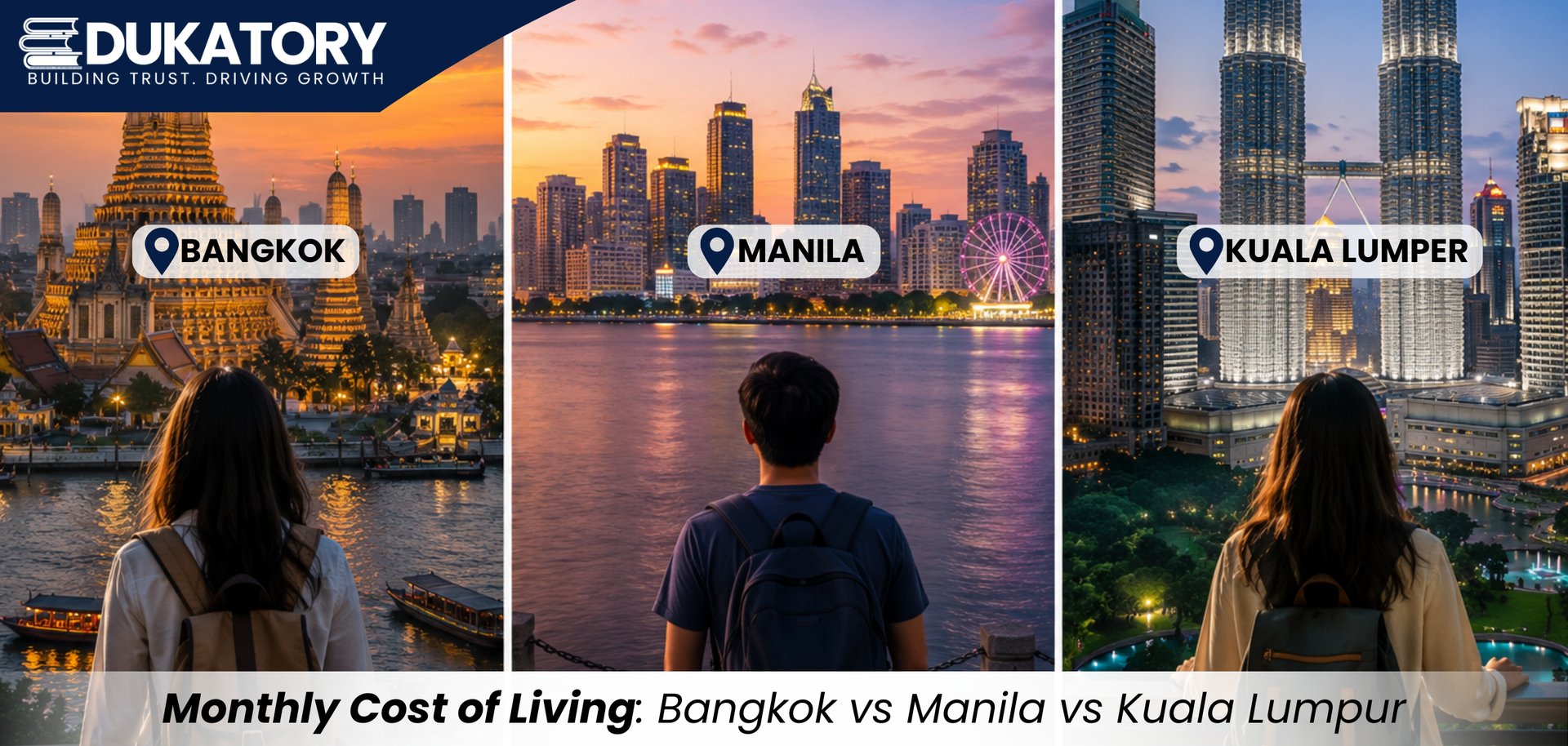
For international students, studying abroad in Southeast Asia is about much more than just enrolling in a university. The choice of city shapes not only academic opportunities but also the rhythm of everyday life. Tuition fees often dominate the conversation, yet it is the monthly living expenses—housing, food, transport, and lifestyle costs—that ultimately determine whether students thrive or struggle in their new environment.
Bangkok, Manila, and Kuala Lumpur have emerged as three of the most popular destinations in the region, each offering unique cultural experiences, strong academic institutions, and vibrant student communities. However, their affordability and lifestyle differences paint contrasting pictures. Bangkok dazzles with cultural vibrancy but comes with rising costs, Manila offers accessible tuition and English-medium education but faces urban challenges, while Kuala Lumpur strikes a balance between affordability and modern infrastructure.
By examining the realities of living in these cities, students can better plan their budgets and align their academic ambitions with financial sustainability. This comparison highlights the advantages and challenges of each destination, helping future international students make informed decisions about where to pursue their studies.
Bangkok: Vibrant but Rising Costs
Bangkok has long been a magnet for international students, thanks to its dynamic blend of tradition and modernity. The city’s universities, such as Chulalongkorn and Thammasat, are well-regarded across Asia, and the student life here is nothing short of energetic. From bustling night markets to cultural festivals, Bangkok offers a lifestyle that feels both adventurous and enriching.
Advantages:
Affordable street food remains one of the city’s biggest draws. Students can enjoy a full meal for just a few dollars, and the variety of Thai cuisine ensures that eating out never feels repetitive.
Modern transport systems like the BTS Skytrain and MRT subway make commuting efficient, especially compared to other Southeast Asian capitals.
Student housing options are diverse, ranging from budget dormitories to upscale apartments, giving students flexibility depending on their budget.
Realities:
Monthly living costs average USD 740–1,100, making Bangkok the most expensive of the three cities.
Shared housing typically costs USD 250–400, but private apartments in central districts can exceed USD 1,000.
Rising rents in popular areas like Sukhumvit and Silom are putting pressure on student budgets.
Entertainment and nightlife, while appealing, can quickly inflate monthly expenses if not managed carefully.
Bangkok’s appeal lies in its vibrancy and cultural richness, but students must be prepared for higher living costs compared to Manila and Kuala Lumpur. Those who thrive here often balance affordable food and transport with careful budgeting for housing and leisure.
Manila: Affordable Tuition, Urban Challenges
Manila is often chosen by international students for its affordability in tuition fees and the ease of communication, as English is widely spoken. Universities such as the University of the Philippines and Ateneo de Manila attract students from across the globe, particularly those seeking English-medium education without the high costs of Western institutions.
Advantages:
Lowest tuition fees among the three cities, making Manila especially attractive for students on tight budgets.
English as an official language reduces the cultural adjustment period and makes academic life smoother.
Strong student communities in Quezon City and Makati provide support networks and vibrant social opportunities.
Realities:
Monthly living costs average USD 520–860, making Manila more affordable than Bangkok but slightly higher than Kuala Lumpur in some categories.
Dormitories cost USD 100–150, while private rentals range from USD 250–500, offering flexibility for different budgets.
Traffic congestion is notorious, with commutes often stretching far longer than expected. Pollution adds another layer of challenge, impacting daily convenience and quality of life.
Imported goods and dining in premium districts like Bonifacio Global City can significantly raise expenses.
Manila’s affordability in tuition is unmatched, but students must weigh this against the urban challenges of traffic and pollution. Those who adapt well often rely on local food, dormitory housing, and strong student networks to keep costs manageable.
Kuala Lumpur: Balanced Affordability and Infrastructure
Kuala Lumpur stands out as the most balanced option, offering affordability without compromising on infrastructure or lifestyle. Universities such as Universiti Malaya and Monash Malaysia have strong reputations, and the city’s modern amenities make daily life smoother compared to Manila’s congestion or Bangkok’s rising costs.
Advantages:
Modern infrastructure and reliable public transport, including the LRT and MRT systems, make commuting straightforward.
Diverse food culture ensures students can enjoy both local hawker meals and international cuisine at reasonable prices.
International universities provide globally recognized degrees, often at lower tuition costs than Western institutions.
Realities:
Monthly living costs average USD 580–800, positioning Kuala Lumpur as more affordable than Bangkok but slightly higher than Manila in tuition.
On-campus hostels cost USD 80–150, shared apartments range USD 150–300, and premium city apartments reach USD 400–600—still lower than Bangkok’s central housing.
Lifestyle costs remain moderate, with affordable entertainment, shopping, and travel options. Weekend trips to nearby destinations like Penang or Singapore are accessible and budget-friendly.
Kuala Lumpur’s balance of affordability, infrastructure, and lifestyle makes it particularly appealing for students who want a comfortable yet cost-effective experience. It avoids the extremes of Manila’s urban challenges and Bangkok’s rising costs.
Final Thoughts
For international students, the choice between Bangkok, Manila, and Kuala Lumpur ultimately depends on balancing budget, lifestyle, and academic goals.
Kuala Lumpur offers the most balanced affordability and infrastructure, making it ideal for those who want a smooth daily life without overspending.
Manila provides the lowest tuition and unmatched ease of communication, but students must be prepared for traffic and pollution.
Bangkok delivers cultural vibrancy and dynamic student life, though at a higher monthly cost.
Platforms like Edukatory help students centralize tuition ranges, living cost comparisons, and school profiles, ensuring informed decisions without the stress of scattered information. By carefully weighing these factors, students can choose the city that aligns best with their academic ambitions and financial realities.